
How to Build a Referral System for Financial Advisors
Create a respectful referral workflow with clear moments, source tracking, follow-up and relationship stewardship.
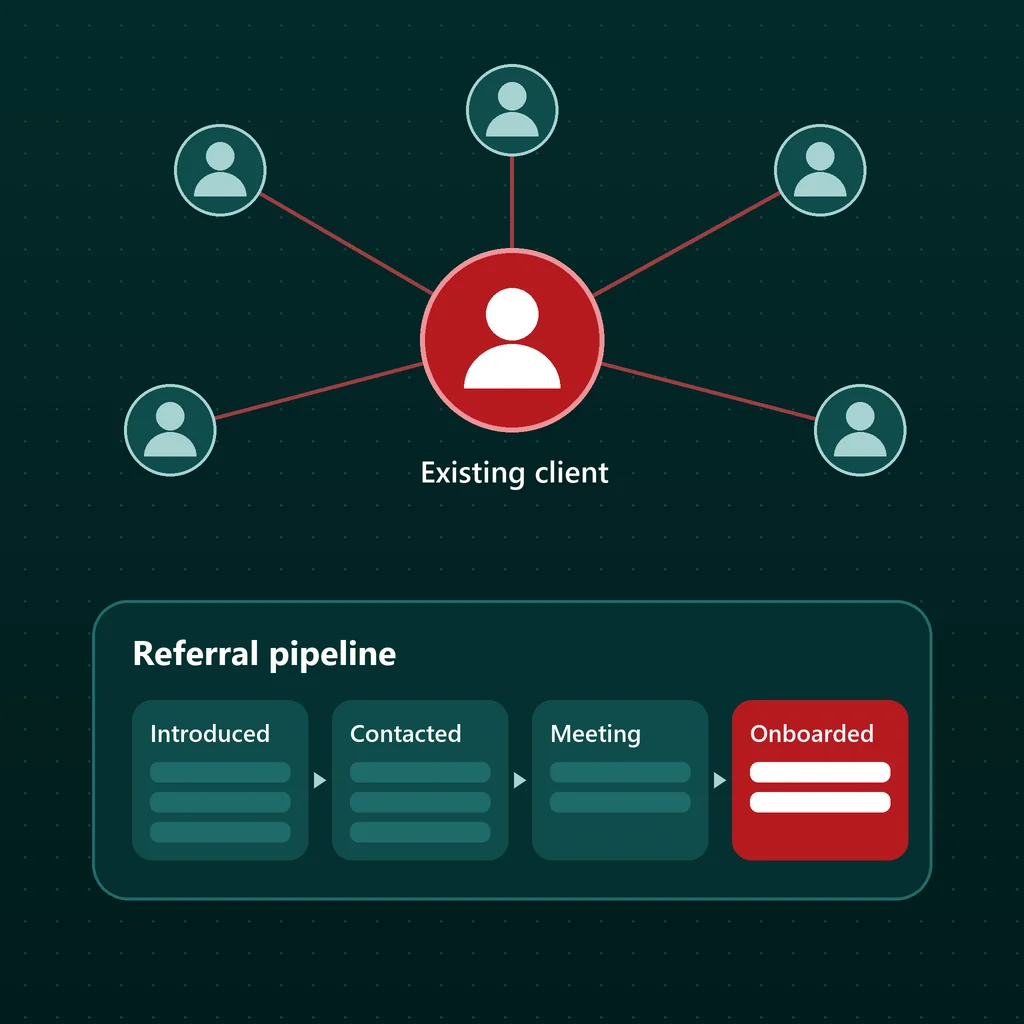
Referrals are relationship-driven, but the operating process around them can still be structured. A CRM helps record the source, context, next action and outcome without turning the request into a mass campaign.
Why do referrals work differently for MFDs and financial advisors?
When a client introduces a friend, colleague or relative, they are lending you their trust. The new prospect arrives with an expectation shaped by the referrer's experience, and the referrer's own relationship with you is now partly on the line.
That is why a referral system for a financial practice should be built around service quality and careful follow-through, not volume. The process exists to make sure no introduction is forgotten, handled carelessly or discussed in a way that breaks confidentiality.
When is the right moment to ask a client for a referral?
The best moments are those where the client has just experienced the value of your service. Asking at the end of a routine call about a pending document rarely feels natural.
Pick two or three moments and train the team to recognize them. The request should feel like part of the conversation, not a script read at the end of every interaction.
- After a portfolio review where the client says the discussion was useful
- After a complex service request, such as a transmission or nominee update, is resolved smoothly
- When a client mentions a family member or colleague who has similar questions
- After onboarding a new family member at the client's own suggestion
How to ask for an introduction without sounding salesy
Keep the request specific and low pressure. Instead of asking whether the client knows anyone who wants to invest, describe the kind of person you tend to help and let the client decide whether anyone comes to mind.
Give the client an easy way to make the introduction, such as sharing your contact card or asking the prospect for permission to be contacted. Never ask a client to share someone else's phone number without that person's knowledge.
Accept a no gracefully and do not repeat the request at every meeting. A client who feels pressured is less likely to refer anyone, and more likely to feel uneasy about the relationship.
What should a referral record in the CRM capture?
A referral record connects the new prospect to the person who introduced them, so the relationship context is never lost. It also lets you follow up on every introduction and review how referrals are handled over time.
Keep the record simple. Every field should have a clear use, and notes should be factual and respectful, since both referrer and prospect may one day ask what was recorded about them.
- Referrer, linked to their client or family record
- Prospect's name and preferred contact method
- How the introduction was made and whether permission to contact was confirmed
- Context the prospect is comfortable sharing, such as the general reason for the enquiry
- Owner, first-contact due date and current stage
- Outcome: onboarded, nurtured, not a fit, or declined contact
How to follow up on a referral and keep the referrer informed
Contact the prospect promptly, ideally within the response window you would apply to your most important enquiries. Mention who introduced you, confirm how they would like to proceed and let them set the pace.
Thank the referrer personally for the introduction, whatever the outcome. You can let them know you have been in touch, but do not share details of the prospect's finances, decisions or investments. The prospect is now owed the same confidentiality as any other client.
Keep the thank-you personal and simple, such as a call or a short note. The best acknowledgement is looking after the person they introduced well. Referral practices and communications should be reviewed against applicable professional and regulatory obligations.
How to review referral quality every quarter
A quarterly review helps you see whether the process is working for clients, not just whether it produces new names. Look at introductions that were not followed up in time, prospects who dropped off early and any feedback from referrers.
A CRM such as Aina CRM can group referrals by referrer, stage and outcome so the review starts from data rather than memory. The review should end with one or two practical changes, such as adjusting the moments you ask or improving the first-contact message.
- Introductions received and how quickly each was contacted
- Stage and outcome of each referred prospect
- Referrals that went quiet and the likely reason
- Whether every referrer was thanked
- Any concern raised by a referrer or prospect
Core checklist
Define appropriate referral moments in the client journey
Make the request personal, specific and easy to act on
Capture referrer, introduction context and permission
Acknowledge introductions promptly and respectfully
Track outcomes without exposing confidential information
Thank and update the referrer within appropriate boundaries
A practical action plan
- 1
Choose two or three natural moments to discuss introductions.
- 2
Create a simple CRM referral record linked to the relationship.
- 3
Assign a response SLA and follow-up sequence.
- 4
Review referral quality, conversion and client experience quarterly.
Frequently asked questions
How often should I ask clients for referrals?+
Ask only at natural moments, such as after a useful review or a well-resolved service request, and not at every interaction. If a client declines, note it and do not raise it again for a long time. Referrals tend to follow consistent service, so the process should protect the relationship first.
How do I track which clients refer new business?+
Link every referred lead to the referrer's client or family record in your CRM. This lets you see who has made introductions, thank them consistently and understand which relationships lead to new ones, without relying on memory or a separate spreadsheet.
Can I tell the referrer that their friend became my client?+
Be cautious. A general acknowledgement that you have been in touch is usually fine, but details about the prospect's decisions, investments or finances should stay confidential. If in doubt, ask the new client what they are comfortable with you sharing.
What if a referred prospect is not a good fit for my practice?+
Tell the prospect politely and, if appropriate, suggest where they might find more suitable help. Record the outcome as not a fit with a short reason. Handling this respectfully protects both the prospect and your relationship with the referrer.
A final note
Referral practices and communications should be reviewed against the professional and regulatory obligations applicable to your business.
See how Aina Tech sets this up in practice: Digital Marketing for MFDs and Financial Advisors.
This article provides general operational and technology information. It is not investment, legal, tax or regulatory advice.